Understand original-hem jeans shortening and when a new denim hem may look better.
What makes a jeans hem look original
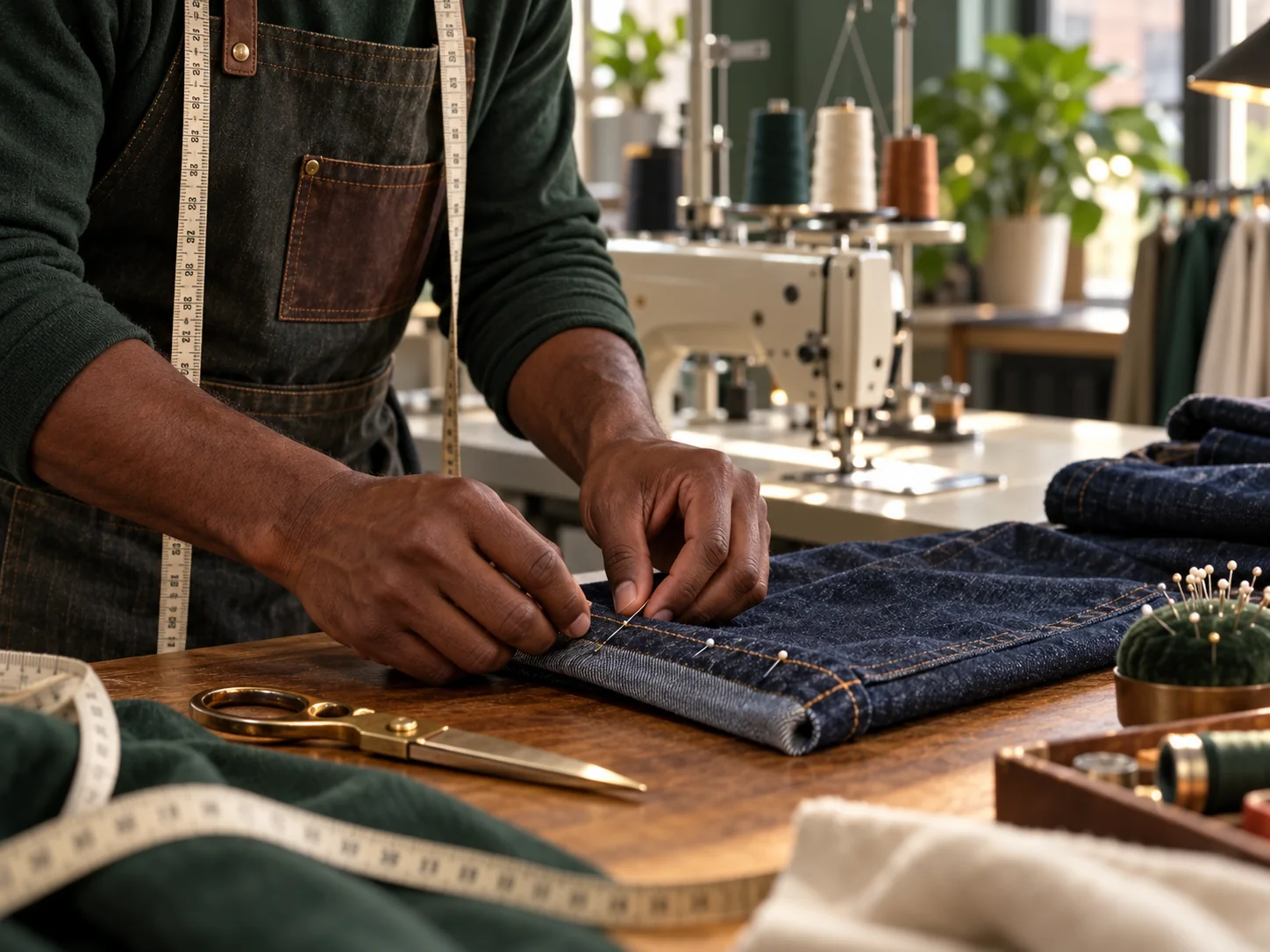
Many jeans have a distinctive worn or faded edge and heavy topstitching. When jeans are shortened, recreating that finish can matter more than on plain trousers. An original-hem method aims to keep the existing edge where construction permits.
It is not suitable for every leg shape. If the new hem sits higher on a noticeably tapered leg, the old edge may be wider than the fabric at the new position.
The questions worth asking before cutting
How much length needs to come off? Is the denim stretchy? Does the original hem have fraying, distressing or a wide fold? These details affect what may be achievable.
Try the jeans with your usual shoes and decide whether you want them just above the shoe, touching it or stacking slightly. A pin or fold can show the desired finish.
When a regular hem may be the smarter option
If the jean leg is heavily tapered or the old hem is damaged, a fresh finish may sit more naturally. A matching stitch colour and suitable press can keep it neat without pretending it is the factory edge.
Ask Final Touch about hemming options with photos of your jeans. The tailor can assess whether preserving the original appearance is practical for the garment.
Common questions
Can all jeans keep the original hem?
No. Leg width, damage and the amount to shorten can make it unsuitable.
Should jeans be washed before shortening?
If they are new, follow the care instructions and discuss potential shrinkage before choosing the final length.
Need advice about your own project?
Final Touch is based in Kalkallo and welcomes enquiries from Melbourne's northern suburbs. Send the item or window details and photos; availability and suitability are confirmed individually.