
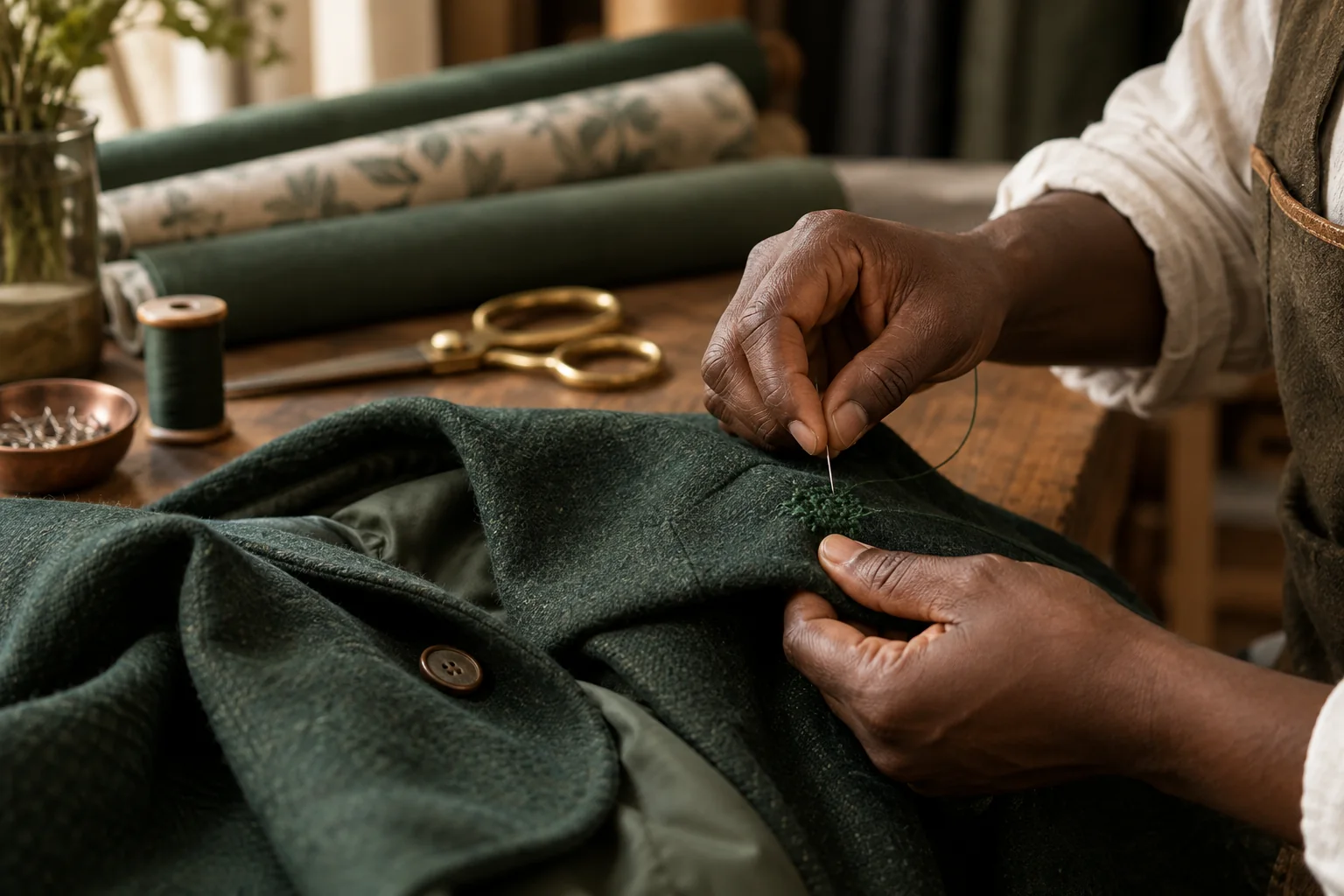
A small clothing defect may be repairable—but the surrounding fabric condition is just as important.
A split seam is not necessarily a torn fabric
If the stitching has come apart but the material is intact, resewing the seam may be an option. If the cloth has ripped alongside the seam, the repair may need reinforcement and can be more visible.
Check both sides of the fabric and avoid pulling on loose threads. Washing a damaged seam before assessment may make the opening larger.
Buttons and closures need matching support
A missing button is easiest to address when you still have the original or a close replacement. If the buttonhole is frayed, replacing the button alone may not solve the problem.
Zips, hooks and other fasteners may also pull at nearby seams. The tailor should see the overall area rather than only the missing part.
Small holes can require big decisions
A hole in a high-tension area, such as a knee or underarm, can be harder to reinforce than a small snag in a low-stress part of the garment. The fabric type and desired appearance matter.
Send Final Touch a photo with a coin or ruler nearby for scale and another photo of the whole item. An inspection will determine whether the repair is suitable.
Common questions
Can a seam be fixed without changing the fit?
Often the original seam can be restored, but stretched or damaged fabric may affect the result.
Should I cut off a loose thread?
Avoid cutting anything attached to the seam until the damage has been assessed.
Need advice about your own project?
Final Touch is based in Kalkallo and welcomes enquiries from Melbourne's northern suburbs. Send the item or window details and photos; availability and suitability are confirmed individually.